
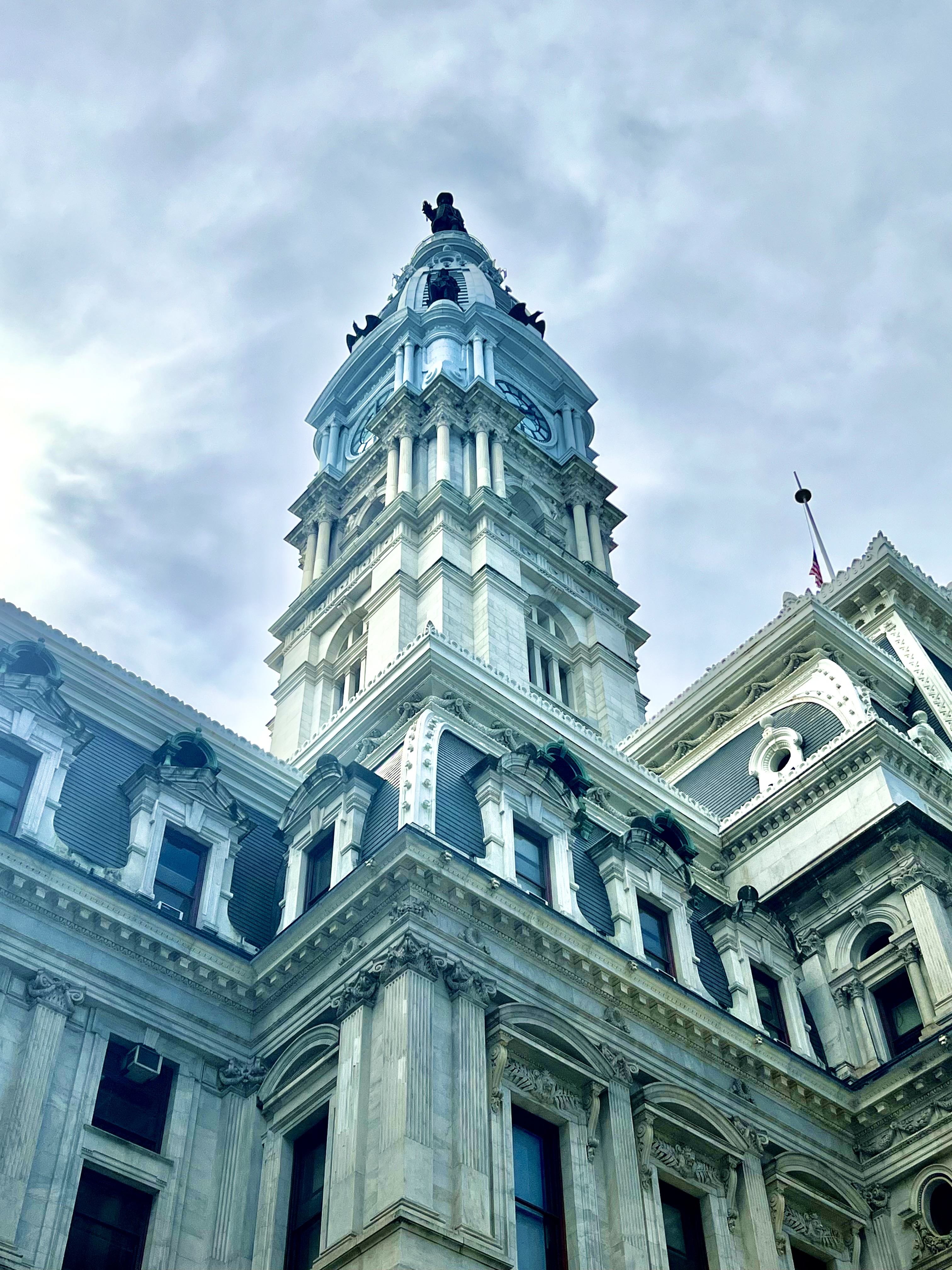
Under Pennsylvania law, Philadelphia (as a city of the first class) “shall have and may exercise all powers and authority of local self-government and shall have complete powers of legislation and administration in relation to its municipal functions….” 53 P.S. § 13131. The Pennsylvania Supreme Court has held that the only limitations on this general power to govern are the Pennsylvania Constitution, the acts of the Pennsylvania General Assembly, and the City’s home rule charter itself.
When we think about what constitutes “complete powers of legislation and administration,” one of the most important functions of state and local government is the “police power,” which means everything necessary to ensure the safety, health, morals, and general welfare of the public. Residents of cities look to local government to protect them from harm while also creating a vibrant economic environment. These laws, created by City Council and approved by the Mayor, are sometimes challenged under principles of state preemption. (Remember, one of the limitations on local governmental powers mentioned above is that a city ordinance cannot conflict with acts of the Pennsylvania General Assembly.)
A whole host of local ordinances have found their way to the Pennsylvania Supreme Court when they regulate activities in a way that affected people do not like. Examples of challenged areas are sales of drug paraphernalia, gun sales, campaign finance, and sales of tobacco products to minors. When deciding whether an ordinance is preempted, the Court recognizes three types of preemption: (1) the General Assembly has expressly preempted local law (“express preemption”), (2) although there is no express preemption, the General Assembly has regulated a field so comprehensively that preemption can be assumed (“field preemption”), and (3) a direct conflict with a Pennsylvania statute (“conflict preemption”). Courts begin their analysis with deference to the City, meaning they begin with an assumption that the City’s ordinance is valid. They then will examine whether the ordinance must nevertheless fail.
Since City residents fighting for quality and vibrancy of life often look to City Council and the legislative process to address their concerns, it is essential to prepare for potential pushback from those who benefit from the status quo. But for fans of Star Trek and Dr. Spock, “The needs of the many outweigh the needs of the few.” For example, although a nuisance business benefits the owner and the few who patron it, it can have a widely damaging effect on the residents and visitors who enjoy the other businesses in the area.
In express preemption cases, the courts must examine what the General Assembly exactly said and what its intentions were. That analysis can be complex. In field preemption cases, the analysis is even more nuanced. Did the General Assembly intend to prevent all local regulation of an area, or can local regulation work in tandem with state law as a “welcome ally” to help achieve a state statute’s greater intent?
I would encourage community leaders advocating for local legislation to dive into the nuanced world of preemption to ensure that the City’s attorneys are not the only voice in contemplating the risk of future challenges. In the executive branch, there is often a general reluctance to engage in new enforcement activities due to the additional work, cost, and potential for political pressure from opponents, no matter how few they may be.
Look for future articles to explore preemption defense in specific ordinances and pending bills, including newly enacted Philadelphia Code 9-4400 relating to nuisance tobacco retailers who repeatedly violate state law by selling items, such as vaping products, to minors.